Mold Removal in Coloma, CA
Coloma sits low, around 750 feet, in the canyon of the South Fork American River on Highway 49, where James Marshall found gold at Sutter's sawmill in 1848. Much of the valley floor is Marshall Gold Discovery State Historic Park, with houses and rental cabins around it, and the river sets the climate: cool damp air settles in the canyon at night, lingers on winter mornings, and the north-facing walls of a house near the water rarely dry all the way between storms.
That canyon air is the thing to understand about mold in Coloma. A bathroom with a small window and no fan holds moisture that a house in Cameron Park would shed by noon. A cabin rented to rafters all summer gets wet towels, wet gear, and a shower running six times a day, then sits shut from October to April. If the grout has gone black and the paint above the shower is peeling, the wall behind it has been damp for a while. Call us and we send the address to an independent provider who covers Coloma and the river canyon; you and that provider settle the details.
River-bottom humidity along the South Fork
Bathrooms take the worst of it, and bathroom mold removal opens the wall behind the tub surround, dries the studs, and checks that the new fan actually ducts outdoors. A rental that smells musty the first weekend of the season needs mold odor removal, which traces the source instead of masking it with a plug-in. For a single wet wall under a window that leaked in one storm, straightforward mold removal is the page.
The 1848 town on the riverbank
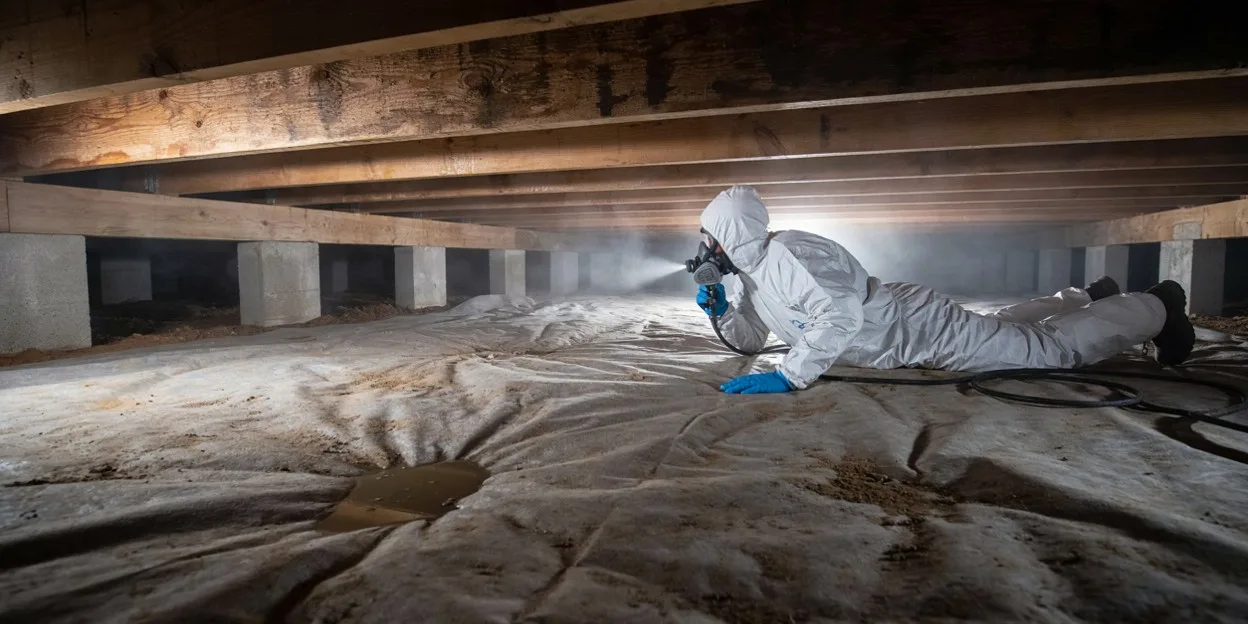
Marshall Gold Discovery State Historic Park sits on the same floodplain as the homes around it, and the river that made the town is also what keeps its crawl spaces damp. The American River Conservancy, based in Coloma, works on the land along that river, and anyone who has walked its trails in January knows how long the canyon holds moisture. A house that shares that ground needs crawl space vents that clear, gutters that reach past the foundation, and an owner who opens the windows on the first dry day.
Call (209) 764-2249 and mention whether the place is lived in year-round or rented by the season. An empty cabin gets metered wall to wall.
Services Available in Coloma
Mold Removal
Sealed containment, negative air, and removal of the wet drywall, trim, and insulation behind a stain in a Kirkwood condo or a foothill home.
Black Mold Removal
Dark growth on a closet wall or under a window handled the same careful way as any other color: find the water, remove what is porous.
Whole-Home Mold Remediation
Room-by-room containment after a pipe split in an empty unit in January or a roof leak ran unseen through a whole ski season.
Attic Mold Remediation
Roof sheathing and insulation fouled by ice dams, warm-side condensation, or a bath fan venting into the attic, cleaned and dried under the snow line.
Bathroom Mold Removal
Growth behind a vanity, above a shower, or inside a wall fed by a weeping valve or a fan that never cleared the steam.
HVAC Mold Cleaning
Furnace cabinets, coils, ducts, and evaporative coolers cleaned when the musty smell arrives every time the blower kicks on.
Mold Odor Removal
Tracking a musty smell to the damp material producing it, removing that material, and treating the air so the smell does not return with the next thaw.
Mold Damage Repair
New drywall, trim, insulation, and subfloor installed once the framing reads dry and the leak that started it is closed.