Mold Removal in Volcano, CA
Volcano sits in a bowl off the Pine Grove road at roughly 2,000 feet, a Gold Rush town small enough that the old buildings on its main street still set the tone for everything around them. Some of those buildings have thick masonry walls that pull ground moisture up from the footing and hold it. Plaster over damp stone blooms behind the furniture, and the smell comes before the stain.
The framed houses on the slopes above town share the bowl: cold air pools on the valley floor overnight, fog sits in the low ground on winter mornings, and everything below the fog line dries slowly. An independent provider serving Amador County picks up the call here; we are the introduction, not the contractor.
Stone walls that hold water: the Gold Rush buildings on Volcano's main street
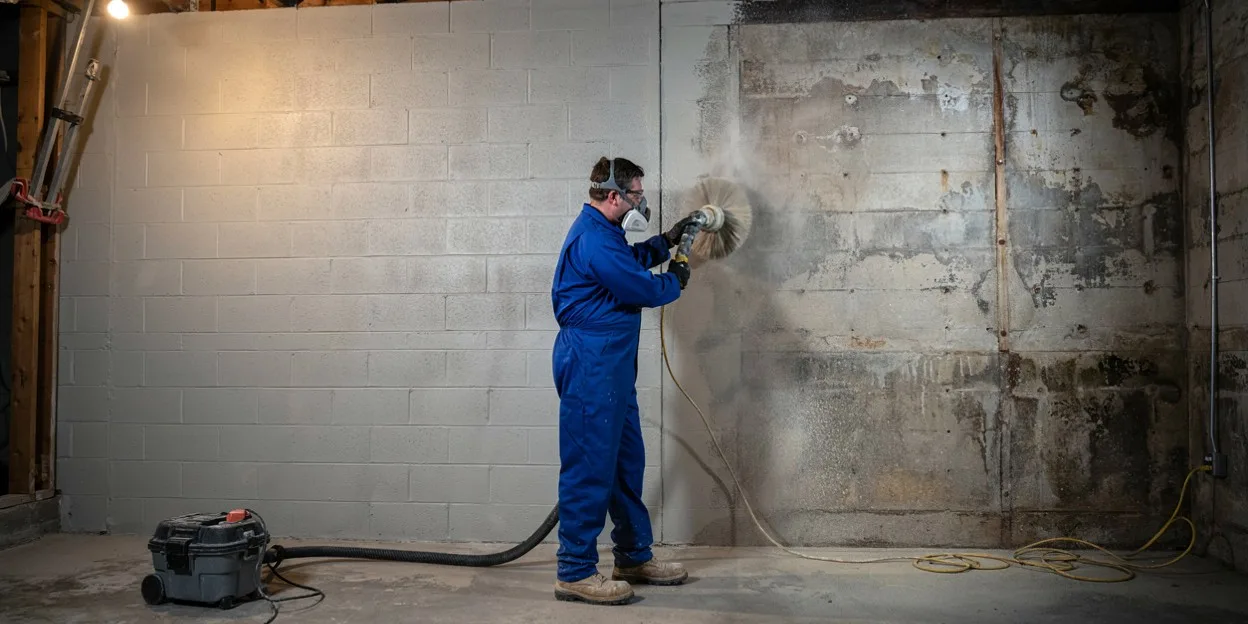
In one of the old masonry buildings, the wet wall is not a leak in the usual sense; it is the wall itself wicking from the ground, and the plaster and lath on the inside face are what grow. Mold removal describes what leaves and what stays when the material behind the growth is stone rather than studs. A damp room that smells but shows nothing on the walls is a mold odor removal call, and in Volcano the source is nearly always the floor over an unvented cellar. Where the old plaster has failed, mold damage repair covers putting the room back with materials that tolerate a damp wall.
Do not seal the inside of a stone wall with paint or foam; the water will pick the next room.
Cave air in the ground, stage lights in the theater: Volcano's damp bowl
A mile from town, Black Chasm Cavern, a National Natural Landmark since 1976, shows what the rock around here does with water: it holds it, year-round, at cave humidity. A cellar dug into that ground never fully dries on its own, so the crew plans on running dryers longer than it would elsewhere. The Volcano Theatre Company stages its seasons in town, and a hall that fills with people on a cold night and empties afterward goes through the same wet-dry cycle as a rental cabin.
If the plaster in the back room is soft, call (209) 764-2249 and say whether the wall behind it is stone or framed; the two get very different scopes.
Services Available in Volcano
Mold Removal
Sealed containment, negative air, and removal of the wet drywall, trim, and insulation behind a stain in a Kirkwood condo or a foothill home.
Black Mold Removal
Dark growth on a closet wall or under a window handled the same careful way as any other color: find the water, remove what is porous.
Whole-Home Mold Remediation
Room-by-room containment after a pipe split in an empty unit in January or a roof leak ran unseen through a whole ski season.
Attic Mold Remediation
Roof sheathing and insulation fouled by ice dams, warm-side condensation, or a bath fan venting into the attic, cleaned and dried under the snow line.
Bathroom Mold Removal
Growth behind a vanity, above a shower, or inside a wall fed by a weeping valve or a fan that never cleared the steam.
HVAC Mold Cleaning
Furnace cabinets, coils, ducts, and evaporative coolers cleaned when the musty smell arrives every time the blower kicks on.
Mold Odor Removal
Tracking a musty smell to the damp material producing it, removing that material, and treating the air so the smell does not return with the next thaw.
Mold Damage Repair
New drywall, trim, insulation, and subfloor installed once the framing reads dry and the leak that started it is closed.